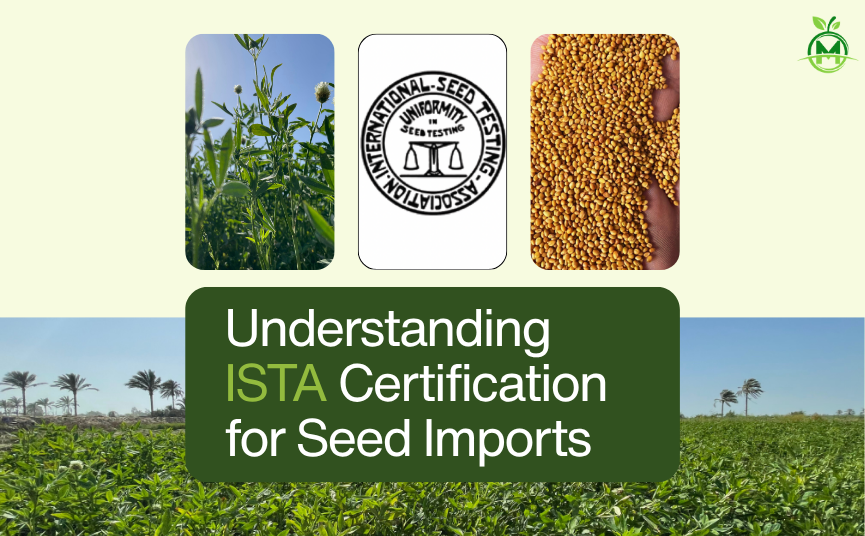
Understanding ISTA Certification for Seed Imports
Why ISTA Certification Matters When Importing Agricultural Seeds
When importing agricultural seeds, quality assurance is one of the most critical factors affecting crop performance and customer satisfaction. Whether you're purchasing forage seeds, vegetable seeds, or field crop seeds, knowing exactly what you're receiving is essential.
This is where ISTA Certification becomes invaluable. It provides independent, internationally recognized verification of seed quality, giving importers confidence that the seeds meet the specifications they were promised.
In this article, we'll explain what ISTA certification is, why it matters, and how it helps protect seed buyers around the world.
What Is ISTA?
ISTA (International Seed Testing Association) is a globally recognized organization that develops standardized methods for seed sampling and testing.
Founded in 1924, ISTA establishes internationally accepted testing procedures that ensure seed quality can be measured consistently, regardless of where the seeds are produced or traded.
An ISTA-accredited laboratory follows strict testing protocols, allowing buyers and sellers to rely on objective, standardized results.
What Is an ISTA Certificate?
An ISTA Certificate is an official laboratory report issued after seeds have been tested according to ISTA rules.
The certificate provides verified information about the quality of a seed lot, allowing importers to make informed purchasing decisions.
Typical information includes:
-
Germination percentage
-
Physical purity
-
Inert matter
-
Other crop seeds
-
Weed seed content
-
Moisture content (when applicable)
-
Seed lot identification
-
Testing laboratory information
-
Date of testing
These results are generated using internationally accepted testing procedures, making them trusted by importers worldwide.
Why Importers Should Request ISTA Certification
1. Independent Quality Verification
Instead of relying solely on supplier claims, an ISTA certificate provides laboratory-tested evidence of seed quality.
This reduces uncertainty and helps buyers compare suppliers using standardized data.
2. Higher Confidence Before Shipment
Importers often purchase seeds months before planting season.
Receiving an ISTA certificate before shipment confirms that the seed lot has been tested and meets the agreed quality specifications.
3. Reduced Commercial Risk
Poor-quality seeds can lead to:
-
Low germination
-
Uneven crop establishment
-
Reduced yields
-
Financial losses
ISTA testing helps minimize these risks by verifying quality before export.
4. Easier International Trade
Because ISTA standards are recognized globally, many importers, distributors, and agricultural companies request ISTA certificates as part of their purchasing requirements.
The certificate creates a common technical language between buyers and sellers.
What Does Germination Mean?
Germination percentage indicates how many seeds are capable of producing normal seedlings under controlled laboratory conditions.
For example:
If a seed lot has a 95% germination rate, approximately 95 out of every 100 seeds successfully germinated during laboratory testing.
While field performance can be influenced by weather, soil conditions, irrigation, and management practices, germination testing provides an excellent indicator of the seed's planting potential.
What Is Seed Purity?
Seed purity measures the percentage of the sample that consists of the intended crop seed.
High purity means the lot contains very little:
-
Inert material
-
Broken seeds
-
Foreign matter
-
Seeds of other crops
-
Weed seeds
Higher purity generally results in more consistent planting and better crop establishment.
ISTA Certification vs. Phytosanitary Certificate
Many first-time importers confuse these two documents.
| ISTA Certificate | Phytosanitary Certificate |
|---|---|
| Confirms seed quality | Confirms plant health |
| Issued by an ISTA-accredited laboratory | Issued by the national plant protection authority |
| Includes germination and purity test results | Verifies the shipment complies with importing country plant health regulations |
| Supports commercial quality assurance | Supports quarantine and import requirements |
Both documents are important, but they serve different purposes.
Does ISTA Certification Guarantee Field Performance?
No.
ISTA certification verifies laboratory-tested seed quality—not field performance.
Actual crop establishment depends on several factors, including:
-
Soil preparation
-
Planting depth
-
Irrigation
-
Temperature
-
Seed storage conditions
-
Fertility management
-
Weather conditions
However, starting with high-quality, ISTA-tested seeds significantly improves the likelihood of successful crop establishment.
Why Professional Seed Exporters Use ISTA Testing
Reputable seed exporters understand that long-term business relationships depend on transparency and consistency.
Providing an ISTA certificate demonstrates that the supplier is committed to:
-
International quality standards
-
Transparent testing
-
Reliable product specifications
-
Customer confidence
-
Professional export practices
For many international buyers, ISTA certification has become an essential part of the purchasing process.
Final Thoughts
When importing seeds, quality should never be left to assumption.
ISTA Certification provides internationally recognized, independent verification of critical seed quality characteristics such as germination and purity. It helps buyers reduce risk, compare suppliers objectively, and purchase with greater confidence.
Whether you're importing berseem clover, forage crops, vegetables, or other agricultural seeds, requesting an ISTA Certificate is one of the smartest steps you can take to ensure you're investing in quality.
Frequently Asked Questions (FAQ)
Is an ISTA Certificate mandatory for importing seeds?
Not always. Requirements vary by country and crop. However, many importers request ISTA certification because it provides trusted, independent verification of seed quality.
How long is an ISTA Certificate valid?
There is no universal expiration date. Since seed quality naturally changes over time depending on storage conditions, buyers often prefer recently issued certificates.
Does ISTA certification replace a Phytosanitary Certificate?
No. An ISTA Certificate confirms seed quality, while a Phytosanitary Certificate confirms that the shipment meets plant health and quarantine requirements. Many international seed shipments require both.
Why is ISTA certification important for forage seed imports?
For forage crops such as berseem clover, alfalfa, and ryegrass, high germination and purity are essential for achieving uniform establishment and maximizing forage yield. ISTA certification helps verify these quality parameters before shipment.
.jpg)
.jpg)